
A free skills workbook by Skilliby
Identify your skills.
Choose what to practise next.
Find skills in your experience, try three short workplace exercises, and create a simple record to guide your next step.
Use examples from work, education, volunteering, personal projects or everyday responsibilities — in any country.
Free to use No account required
01 / Your experience
Find skills in things you have already done
Start with a situation you remember clearly.
Think of a time when you completed a task, solved a problem, learned something useful or helped someone. Choose an example where you can explain your own actions.
- SituationWhat needed to happen?
- ActionWhat did you personally do?
- ResultWhat happened? What supports your account?
- SkillWhat ability did you use?
From a general statement to a specific example
General statement
“I communicate well.”
A more specific example
“I coordinated volunteers for a community event. I asked when people were available, noticed an uncovered shift and sent a clear request that helped two volunteers agree on a change.”
Skills to explore: Planning, coordination and written communication.
This example is illustrative. Use details from your own experience and describe the actions you actually took.
Skills you might notice
- Technical and practical skills: using a spreadsheet, editing a document, writing code, operating equipment or following a work process.
- Communication and collaboration: explaining information, listening, writing clear requests or coordinating a shared task.
- Thinking and managing work: checking information, comparing options, setting priorities or adapting a plan.
Choose one skill to explore
Pick a task you want to handle more confidently. Make your practice goal specific.
Broad goal“Improve communication.”
Specific practice goal“Write requests that explain what needs to change and when it is needed.”
02 / Put it into practice
Try three short workplace exercises
Choose an exercise connected to your goal, or work through all three. Write, type or speak your response before opening the suggested answer.
These starter exercises were created for this guide. They are separate from the tasks in the Skilliby app and do not produce a Skilliby score.
Plan a busy morning
Skills to practise: Prioritization, planning and communication.
It is 9:00 a.m. You have three tasks:
- Confirm tomorrow’s meeting room by 10:00 a.m. This takes about five minutes.
- Update a customer record by noon. This takes about 15 minutes.
- Prepare a report by 3:00 p.m. This takes about 45 minutes, but you need figures from a teammate before you can finish it.
Your task
Write your first three actions. Then explain when you would work on the report and what you would do if the figures arrived late.
Check your plan
- Have you accounted for each deadline?
- Have you requested the missing figures early?
- Have you left time to check the report?
- Have you planned how to communicate a possible delay?
See one possible approach
Ask your teammate for the figures and agree when to expect them. Confirm the meeting room before 10:00 a.m., then update the customer record before noon.
Reserve time to prepare and check the report before 3:00 p.m.
If the figures may arrive too late, tell the person expecting the report. Explain what is missing and discuss whether a partial report or a revised deadline would be useful.
Other sequences can also work. A useful plan accounts for deadlines, dependencies and communication.
Make a request clearer
Skills to practise: Written communication and attention to detail.
A colleague needs to update a client presentation. Slide 4 contains the old delivery date. The confirmed new date is 18 November. The presentation must be ready by 2:00 p.m. today.
Your first draft says:
“The presentation is wrong. Please fix it quickly.”
Your task
Rewrite the message so your colleague knows what to change and when it is needed.
Check your message
- Is the requested change specific?
- Is the correct information included?
- Is the deadline clear?
- Is the tone respectful?
See one possible answer
“Hi Sam, could you update the delivery date on slide 4 to 18 November and send me the revised presentation by 2:00 p.m. today? Please let me know if that timing is difficult.”
The message names the change, provides the correct information and sets a clear deadline.
Try another version: How would you change the message for a client rather than a colleague?
Check a short report
Skills to practise: Numeracy, checking information and clear reporting.
A delivery report contains these figures:
- Monday: 12 deliveries completed; 11 were on time.
- Tuesday: 12 deliveries completed; 9 were on time.
- Wednesday: 10 deliveries completed; 10 were on time.
Each completed delivery was recorded as either on time or late. The draft summary says:
“We completed 36 deliveries, and all deliveries were on time.”
Your task
Check the totals and rewrite the summary using only the information provided.
Check your answer
- Did you add the completed deliveries correctly?
- Did you check the on-time total separately?
- Did you keep your explanation within the available facts?
See the answer
“We completed 34 deliveries across the three days. Of these, 30 were on time and four were late.”
Completed deliveries: 12 + 12 + 10 = 34. On-time deliveries: 11 + 9 + 10 = 30.
The figures do not explain why four deliveries were late. You would need more information to explain the cause.
What did you notice?
Identify one thing you handled well and one thing you would change.
Your response gives you information about this particular task. Build a broader picture through different situations, real experience and feedback.
03 / Keep a useful record
Create your skills record
Connect the skill to something you did, record what you noticed and choose a next step.
Keep the date and context. Label practice exercises clearly so you can distinguish them from real work experience.
Example learning record
- Skill
- Written communication.
- My goal
- Write requests that make the change and deadline clear.
- Context
- The presentation-request exercise in this guide.
- What I did
- Rewrote the request to my colleague.
- Evidence
- My revised message named the slide, included the new delivery date and stated the deadline.
- What I noticed
- My first version explained the change but missed the deadline.
- My next practice task
- Use the same checks in my next suitable work or volunteer message. Ask whether the request was clear.
- Review point
- After three similar messages, look for details I still need to explain in a follow-up.
Copy this template
Use one entry for each skill you want to explore.
Skill:
My goal:
Date and context:
What I did:
Evidence or feedback:
What went well:
What I need to work on:
My next practice task:
When I will review it:
Keep your notes brief. Use anonymized examples and feedback you have permission to keep. Leave out confidential workplace information, client details and other people’s personal information.
04 / Your next step
Make your next practice useful
Choose one small task connected to your goal:
- Write a request for a different audience.
- Check a fresh set of figures.
- Plan a task with a different deadline or dependency.
- Practise a spreadsheet function using sample data.
- Ask someone to review an example and suggest one improvement.
Before you begin, decide what you will check. Afterwards, record what happened and what you would change.
Look for specific differences: fewer missing details, a clearer explanation or less help needed for a comparable task. Consider the context when comparing results.
Working with a counsellor or mentor?
You can use this guide between appointments. Bring one example from your experience, one observation from an exercise and one question about what to practise next.
A useful discussion might cover:
- Which skill does my example support?
- What other experience or feedback would help?
- What is a realistic next practice task?
Continue with Skilliby
Keep your skills profile current
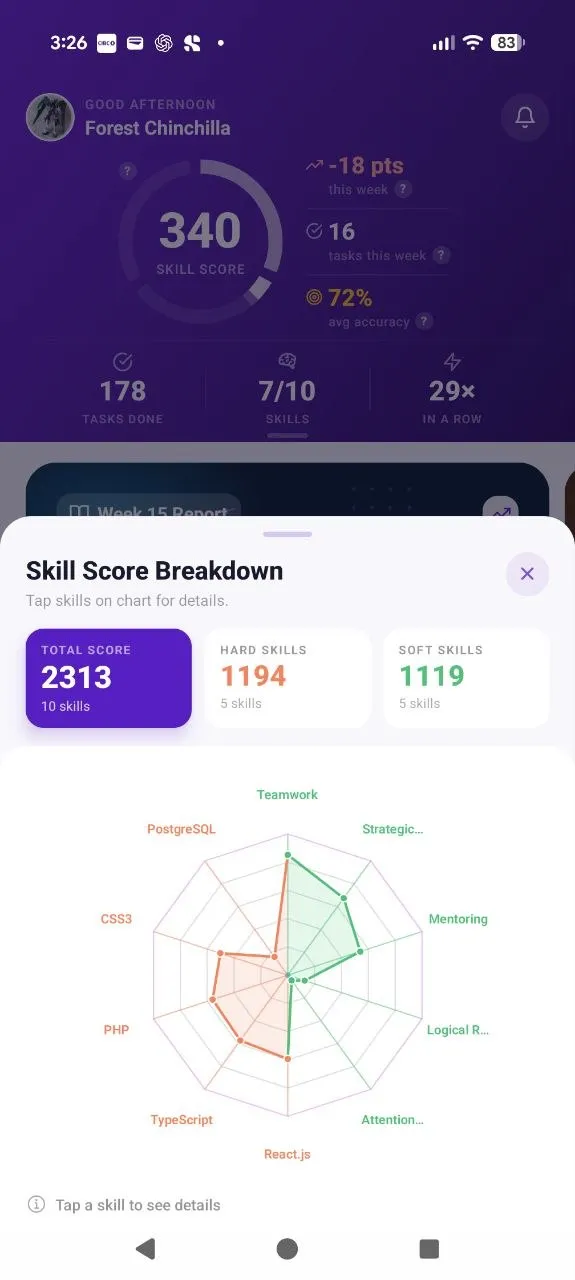
Skilliby turns practice into a measurable skill profile.
Choose your professional context and skills, then work through short practical tasks in the app. Completed tasks contribute to your skill results and progress history.
Personal skill analysis and knowledge cards help you identify topics to work on next.
Your notes from this guide remain your own learning record. Your Skilliby profile develops through tasks completed in the app.


A few common questions
What if I have little paid work experience?
Start with education, volunteering, a personal project or everyday responsibilities. Experience from any country can provide useful examples. Explain the context and focus on your own actions.
Can I use my skills record when applying for a job?
Use it to find relevant, truthful examples for your resume or interview preparation. Keep practice exercises clearly labelled and separate from professional experience.
Is this a formal skills assessment?
This guide provides reflection prompts and practice exercises. It does not award a qualification, certify professional competence or replace an assessment required for a particular occupation.
Further resources
Explore more assessment and training tools through the Government of Canada’s Skills for Success resource collection.
Choose one skill, save one honest example and decide what you will practise next.
Back to the template